Reading a Current Issue Through Its Earlier Chapters
Reading a current issue through its earlier chapters helps separate what has changed from what persists, and spot which past events genuinely matter.
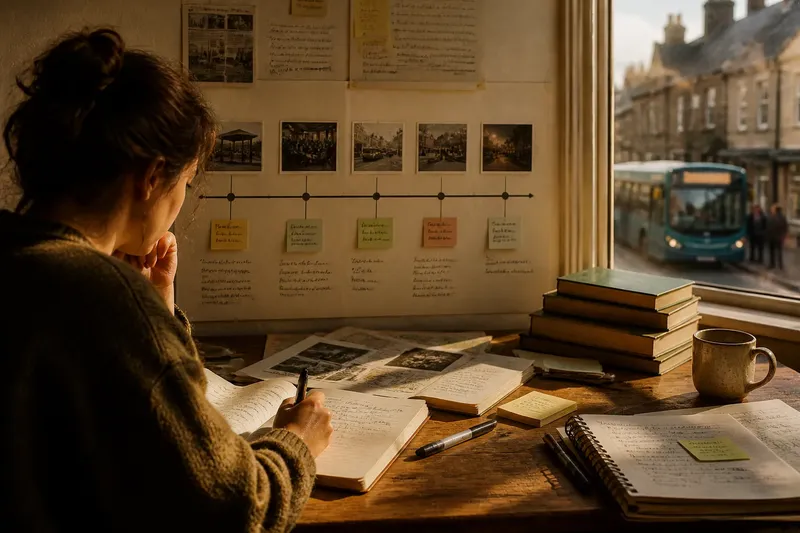
A common mistake in reading a current issue is to begin its story at the moment it became urgent. That can make an old dispute look like a sudden rupture, or a familiar policy seem unchanged when its purpose has shifted. Reading a current issue through its earlier chapters gives you a better handle on what moved, what endured and which past events belong in the account.
The aim is not to assemble a grand history. It is to build a compact, useful timeline that explains the present without pretending that every earlier event caused it. These field notes offer a way to do that.
Where does the present story begin?
Start with the immediate trigger: a new rule, a public decision, a court ruling, a strike, a price rise or a striking statement. Then ask what made that moment possible. The answer may lie in a gradual change that received little attention, such as a service becoming harder to access, a group gaining new influence or an old rule acquiring a different purpose.
Keep two starting points in view. The first is the moment people began discussing the issue; the second is the earlier condition that helps explain why it mattered. They are often far apart. Treating the first headline as the beginning can confuse visibility with origin.
Write a one-sentence description of the present question before looking backwards. “Why is this service under strain?” is more useful than “What is the history of public services?” A narrow question keeps the timeline from swelling into a catalogue.
Which changes deserve a place on the timeline?
Choose events because they changed the issue’s direction, boundaries or meaning—not because they are famous. A useful entry should help explain a feature of the present: who is affected, what choices are available, how the issue is described or which constraints now apply.
- A change in rules: Did a law, formal policy or eligibility condition alter what people could do?
- A change in capacity: Did staffing, facilities, funding arrangements or access to a service shift?
- A change in participation: Did new groups gain a voice, or did an existing group lose influence?
- A change in language: Did the public debate begin describing the issue in a new way?
- A change in conditions: Did a local, economic or international circumstance alter the problem people faced?
These are prompts, not a demand to include every category. If an event does not clarify the present question, leave it out for now. A shorter timeline with a clear purpose is easier to revise than a crowded one that implies importance by sheer volume.
What stayed in place while other things moved?
Continuity is easy to miss because change makes a cleaner headline. Look for the basic arrangement that has survived: who carries responsibility, who bears the inconvenience, which communities have access, or what trade-off keeps recurring. A policy may have a new name while preserving an older division of benefits and burdens.
Compare like with like. If a debate concerns access, trace who could use the service before and after a change. If it concerns public language, note whether the underlying concern is new or simply being described differently. This prevents a shift in presentation from being mistaken for a shift in lived conditions.
Say you are following a town’s recurring argument over late bus services. Imagine that a new evening route has recently been proposed. Earlier chapters might show that the dispute has persisted through several plans, while the groups most affected and the town’s work patterns have changed. The useful observation is not simply that the argument is old; it is that an enduring concern now meets different circumstances. That distinction helps a reader ask what the new proposal actually addresses.
How can you tell whether a past event is relevant?
Ask what explanatory work the event performs. If removing it from your account would leave the present issue just as clear, it may be background rather than a turning point. If it explains why a rule exists, why a group distrusts a proposal or why one option is unavailable, it deserves closer attention.
Use a simple link test: state the past event, name the feature of the present it may help explain, and identify the connection between them. “A previous service change matters because residents still rely on the route it replaced” is a claim that can be examined. “This issue has always been controversial” is a mood, not an explanation.
Be especially careful with events that are memorable but distant. A dramatic episode can become a convenient origin story, even when later decisions and changed conditions did more to shape the current situation. Keep the connection modest unless the evidence supports a stronger one.
Which source can support each chapter?
Match the question to the source. A dated policy document can show what a rule said at the time; meeting minutes may show which concerns were raised; local reporting can reveal how an issue was experienced and discussed. A current explainer can orient you, but it may compress disagreements or skip earlier turns that do not fit its central account.
Read documents for both content and limits. A formal record may tell you what was decided without showing how people experienced the decision. A personal account may illuminate an effect without establishing how widespread it was. Different sources answer different questions; no single document has to carry the whole story.
Keep a brief note beside each timeline entry: what the source establishes, what it does not, and what remains uncertain. If accounts conflict, preserve the disagreement instead of silently choosing the tidiest version. That uncertainty can itself be relevant to how the issue enters public conversation.
How do you keep a timeline from becoming a cause-and-effect story?
A sequence is not proof of causation. An event may come before a change without producing it; several influences may have converged, or the apparent turning point may simply be the first one that attracted widespread attention. Use verbs carefully: “preceded”, “coincided with” and “contributed to” make different claims.
Look for intermediate links. If a past decision is said to have shaped a current condition, what changed between them? Was a rule implemented, an institution reorganised, a pattern repeated or a later choice made in response? Without a plausible chain, the connection may be an association rather than an explanation.
Also look for paths not taken. A proposal that was rejected can matter if it narrowed later choices or left a concern unresolved. But its mere presence in an old record does not make it a decisive turning point. Explain the consequence, or keep the event in the margins.
What questions help test your reading?
How far back should I look?
Go back far enough to explain the present feature you are investigating, then stop. If the earlier period adds no new explanation, it is context beyond the scope of this account.
Should I include a major event if it barely affected this issue?
Not just because it was prominent. Include it only if you can identify a specific change in the issue’s rules, participants, conditions or public meaning that followed from it.
How can I handle competing accounts of the past?
State what each account agrees on and where they differ, then note what kind of evidence could clarify the point. Do not turn an unresolved dispute into a settled fact for the sake of a smoother narrative.
When is a past pattern no longer useful?
When the circumstances that made it relevant have changed, or when it does not help answer your present question. A comparison can illuminate a difference as readily as a resemblance.
What should your field notes leave behind?
A useful account can fit on a page: the present question, a few turning points, the continuities that matter, and a note on uncertain links. Mark each event as a change, a persistence or a disputed connection. This simple distinction makes it harder for a vivid anecdote to stand in for the whole history.
Before sharing your account, ask what a reader might mistake for inevitable. A policy choice may have been one of several possibilities; a familiar debate may have changed even while its label stayed put. Make those distinctions visible, and your timeline becomes a tool for understanding rather than a story that claims the past had only one possible ending.
Reading a current issue through its earlier chapters is most useful when it leaves one good question open: which part of the present is genuinely new, and which part has simply become harder to ignore?